Electrically Conductive Adhesives For Electronics Applications
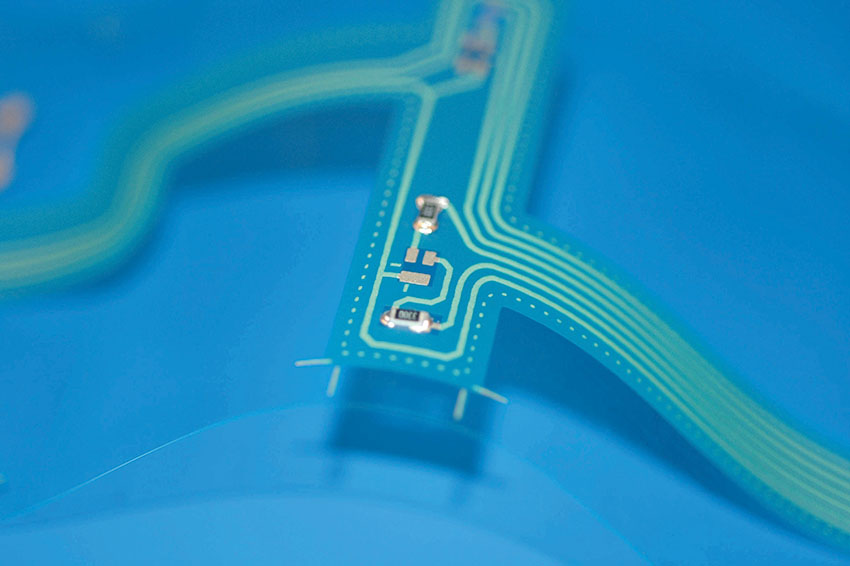
Bonding instead of soldering: Electrically conductive adhesives have many advantages over conventional soldering processes. Conductive adhesives are the perfect solution for making electrical contacts on temperature-sensitive substrates, as their curing temperature lies clearly below soldering temperature. In addition the adhesives are much more flexible than solder and are therefore better able to withstand vibrations. A further advantage over soldering is that conductive adhesives are lead- and solvent-free.
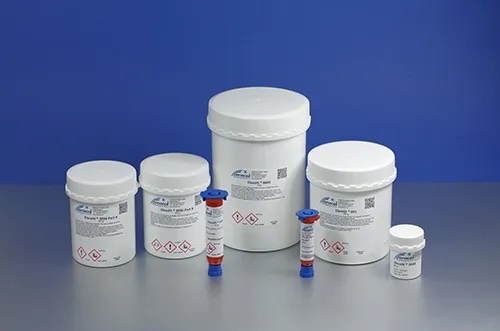
With its Elecolit® range Hoenle offers a broad spectrum of electrically conductive adhesives: single-component adhesives that can be simply applied with dispensers or jets or screen-printed, as well as two-component products that cure at room temperature and have a long storage life. Innovative hardener systems in many of the one part epoxy based adhesives develop cure within minutes.
The table below lists a selection of conductive sealing compounds and silver epoxy or acrylate resins from Hoenle. Further products and custom solutions are available on request. To download the technical datasheets (TDS) please click on the adhesive name.
| Adhesive | Application Areas | Viscosity [mPas] | Base | Curing * | Special Properties |
|---|---|---|---|---|---|
| - | paste-like | epoxy | thermal |
|
|
|
80,000-90,000 Mix, 25,000-35,000 part A, 60,000-70 000, part B, (Rheometer, 25 °C, 10s^-1) | 2 component epoxy | thermal room temperature |
|
|
| - | paste-like | 2 component epoxy | thermal room temperature |
|
|
|
1,500-3,500 | epoxy | thermal |
|
|
| - | 150,000-190,000 (LVT, 25 °C, Sp. 7/5 rpm); 12,000-30,000 (Rheometer, 25 °C, 10s^-1) | acrylate | UV + pressure VIS + pressure |
|
|
|
paste-like | 2 component epoxy | thermal |
|
|
| - | paste-like | 2 component epoxy | thermal |
|
|
| - | paste-like | polyimid | thermal |
|
|
| - | paste-like | 2 component epoxy | thermal, room temperature |
|
|
| - | 1,000-2,000 (Rheometer, 25 °C, 10s-1) | acrylate | thermal |
|
|
|
10,000 – 15,000 (Rheometer 10s^-1) | epoxy | thermal |
|
|
|
4,000-8,000 | epoxy | thermal |
|
|
|
5,000-15,000 (Rheometer 10s^-1) | epoxy | thermal |
|
|
|
20,000-40,000 | epoxy | thermal |
|
|
|
6,000-15,000 | polyester | thermal |
|
*UV = 320 – 390 nm VIS = 405 nm
Contact And Support
Do you have any questions or need support for our bonding solutions? We are happy to help you.