
Hotmelt PSA
UV Solutions for precisely tunable adhesion, high durability and versatile bonding applications.
The converting and coating industry is undergoing a fundamental shift. Tighter sustainability requirements, rising energy costs, and the demand for stable, reproducible processes are accelerating the move away from solvent-based systems. Hotmelt PSAs have played a central role in driving that transition: they require no solvents, eliminate drying ovens, and enable significantly more compact line configurations. But as performance requirements increase, conventional rubber-based hotmelt systems reach the limits of what their chemistry can deliver.
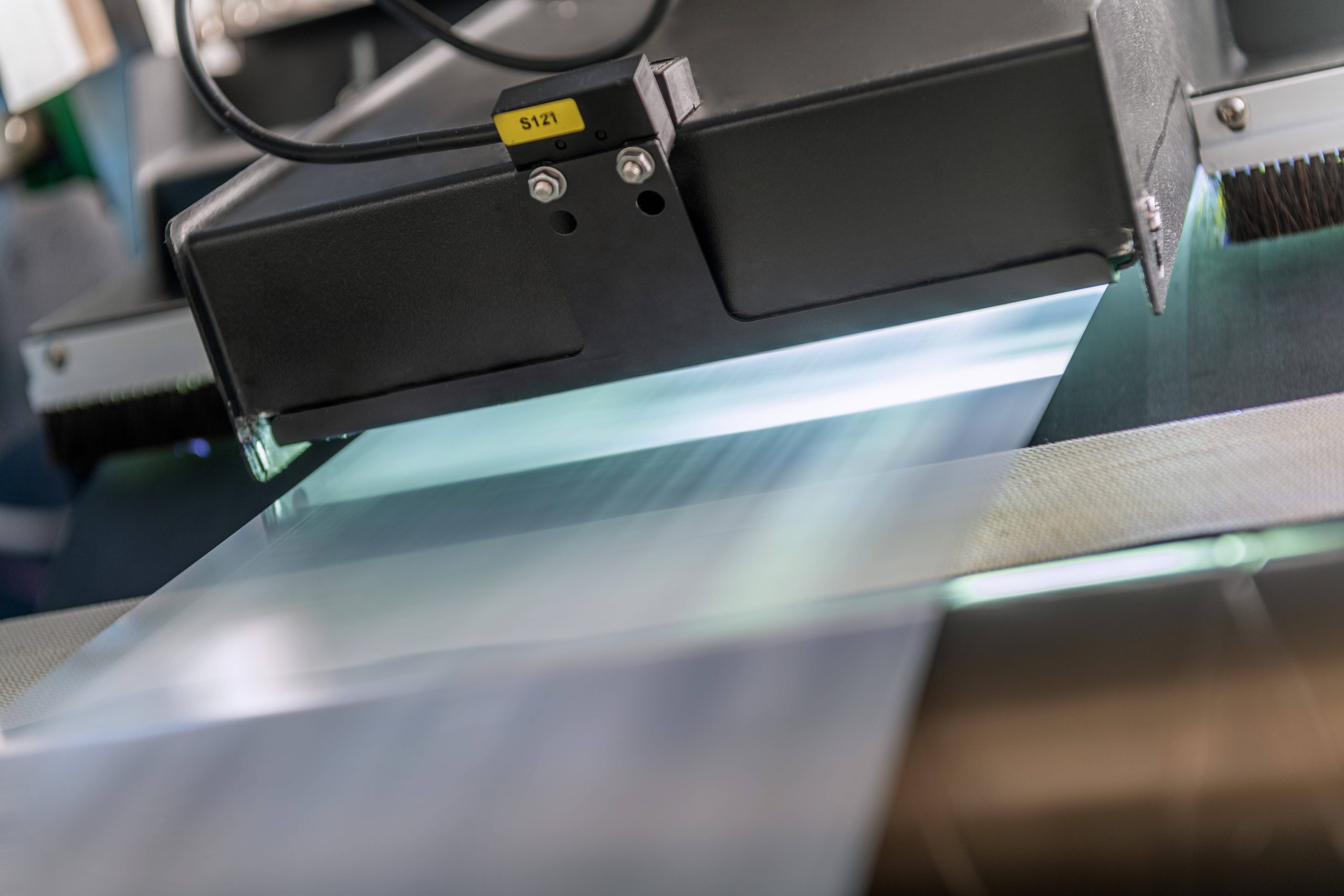
UV-curable hotmelt PSAs based on acrylate chemistry extend those limits. UV light triggers a controlled crosslinking reaction, forming a three-dimensional polymer network whose mechanical properties can be precisely dialed in. By adjusting the UV dose, the balance between tack (adhesion) and cohesion (internal strength) of the PSA film can be set reproducibly, from a single base formulation, a wide spectrum of adhesive properties becomes achievable.
Compared to SIS hotmelt alternatives, UV-acrylate PSAs offer superior durability: excellent heat resistance, UV and oxygen stability without embrittlement or yellowing, and high moisture resistance. Lower processing temperatures and a fully solvent-free process make operations safer, cleaner, and more sustainable.
Why UV-curable hotmelts
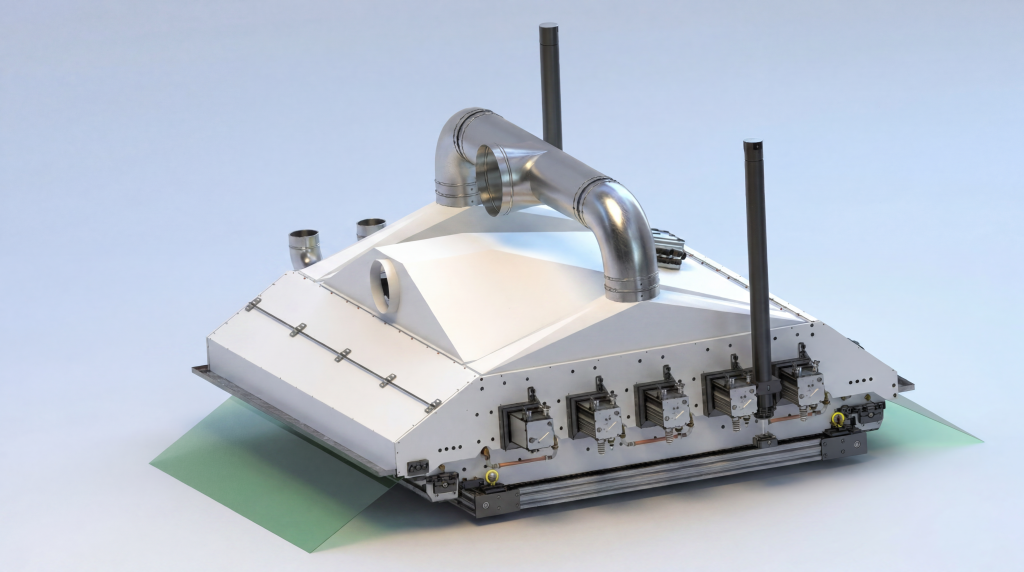
The decisive advantage of UV-curable systems lies in precise, in-process control. UV dose is a function of irradiance intensity and dwell time, and dwell time depends directly on line speed. Hoenle UV curing systems automatically adjust output power to match web speed, maintaining consistent curing conditions across the entire process, regardless of throughput.
Uniform irradiance across the full substrate width is equally critical: only homogeneous intensity ensures consistent product properties from edge to edge. Integrated inline measurement systems detect changes such as lamp aging or contamination early, enabling continuous adjustment. Process parameters can not only be set with precision, they can be permanently monitored.
This level of process control is what turns the potential of UV-crosslinked chemistry into reproducible, real-world performance.
In this technical article, you’ll learn more about UV-curing systems in hot-melt PSA applications.
Applications
UV-acrylate hotmelt PSAs are ideally suited wherever precise tuning of adhesion and cohesion is required. Different applications place different demands on the adhesive system:
Labels: Reliable adhesion to low-energy plastic substrates (PE, PP), glass, and PET; functionality at low temperatures and under humid conditions; compliance with regulatory requirements, including food-contact applications.
Tapes: High cohesion, thermal resistance well above 80 °C, and long-term mechanical stability under environmental stress.
Medical applications: Skin-compatible adhesion combined with breathability; residue-free removal; compliance with medical-grade requirements.
Porous substrates: On materials such as textiles or foams, the hotmelt PSA stays at the surface and does not penetrate uncontrollably; enabling material combinations that are difficult or impossible to achieve with liquid systems.
Key Advantages
- Tunable adhesive properties: Tack and cohesion can be adjusted continuously via UV dose. One base formulation, fully variable performance.
- Superior durability: High heat resistance, UV and oxygen stability without aging or yellowing, excellent moisture resistance — outperforming rubber-based hotmelt systems.
- Solvent-free, sustainable processes: No drying ovens, no solvent emissions, reduced explosion risk. Simpler permitting and lower energy consumption.
- Compact line footprint: Hotmelt coating lines are far shorter than solvent-based systems with drying sections, reducing capital investment, floor space, and operating costs.
- Stable, monitored curing: Automatic power adjustment to line speed; inline monitoring for consistent cure quality throughout production.
- Extended performance window: UV crosslinking enables stable, reproducible processes at higher coating weights and in demanding applications where conventional hotmelt systems reach their boundaries.
Contact And Support
Do you have any questions or need support for our Curing Solutions? We are happy to help you.