
Glass Adhesives
Bonding glass to glass, glass to metal or glass to polycarbonates can be challenging – not so with Hoenle’s glass adhesives. As glass is transparent or translucent, UV curable adhesives are the best choice for ensuring a reliable, permanent, and invisible bond.
The majority of Hoenle’s glass adhesives will cure under UV light or visible light. Adhesives that were specially adapted to cure under visible light are the perfect solution to bond UV blocked glass (such as VSG). Both our UV and visible light curable adhesives for glass bonding can be used with either monochromatic LED light sources or broad spectrum UV discharge lamps.
Curing in fractions of a second, our Vitralit® glass adhesives reduce assembly time and lower total process costs. These adhesives ensure high strength bonding of glass to glass, glass to metal (typically to steel or aluminium), or glass to other dissimilar substrates, including polycarbonate and acrylic. These adhesives are ideal for flat glass, float glass, tempered glass, and most other glass compositions.
Vitralit® glass adhesives are single component and solvent-free, easy to dispense and to handle. Many are available in multiple viscosity ranges, from water-like wicking grades to highly filled thixotropic gels.
Vitralit® glass adhesives can be specifically matched to the unique requirements of the application. Selections can be made based on the adhesive’s optical clarity, refractive index, or resistance to environmental stresses including temperature and humidity. To minimize movement and stress in optics, Vitralit® adhesives are available with low CTE (coefficient of thermal expansion), low shrink during cure, and high Tg. For medical applications, Hoenle possesses a variety of medical grade adhesives that are biocompatible and are resistant to common sterilization processes.
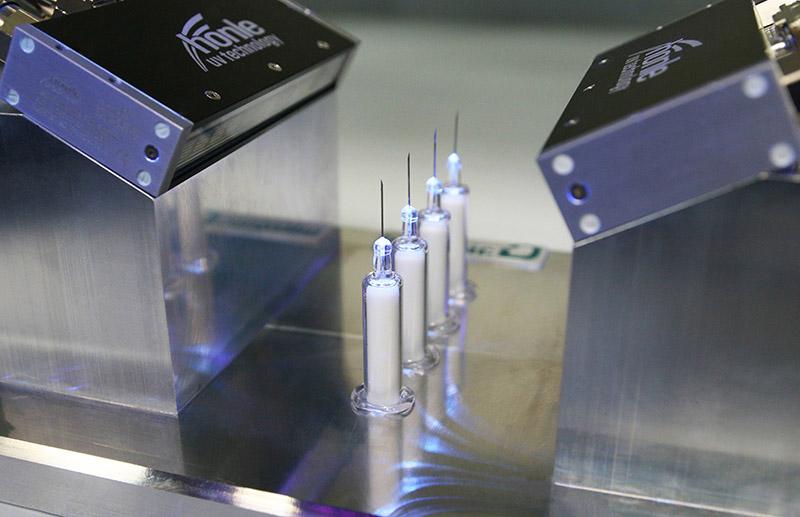
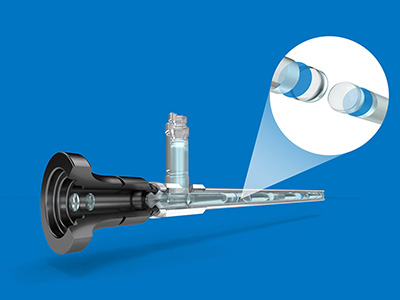
Hoenle’s glass adhesives are used to bond optical assemblies, mirrors, hardware for glass shower enclosures, display cases, outdoor lighting, decorative bevels or bonding of electronic displays. Medical applications include the bonding of metal cannulae into glass syringes.
Below is a selection of light curable glass adhesives and glass bonding solutions. Please open one of the links below to view the technical data sheet.
Glass Adhesives for Optoelectronics
| Adhesive | Application Areas | Viscosity [mPas] | Base | Curing * | Special Properties |
|---|---|---|---|---|---|
| - | 250-400 (LVT, 25 °C, Sp.3/30rpm) | epoxy | UV |
|
|
| - | 10,000-20,000 | epoxy | UV secondary heat cure |
|
|
|
600-1,250 | epoxy | UV |
|
|
|
350-850 (LVT, 25 °C, Sp. 3/60 rpm) | epoxy | UV secondary heat cure |
|
*UV = 320 – 390 nm VIS = 405 nm
Flexible Glass Adhesives
| Adhesive | Application Areas | Viscosity [mPas] | Base | Curing * | Special Properties |
|---|---|---|---|---|---|
|
900-1,500 (LVT, 25°C, Sp. 3/30 rpm) | acrylate | UV VIS |
|
|
|
4,000-8,000 | acrylate | UV VIS |
|
|
| - | 12,000-30,000 | acrylate | UV VIS |
|
|
|
1,000-1,500 | acrylate | UV VIS |
|
|
| - | 10-100 | acrylate | UV VIS |
|
|
| - | 50-150 | acrylate | UV VIS |
|
|
|
Vitralit® VBB-N2 SV
|
- | 300-500 | acrylate | UV VIS |
|
*UV = 320 – 390 nm VIS = 405 nm
Glass adhesives for bonding with metals, glass, ceramics
| Adhesive | Application Areas | Viscosity [mPas] | Base | Curing * | Special Properties |
|---|---|---|---|---|---|
|
600-900 | acrylate | UV VIS secondary heat cure |
|
|
|
3,000-6,000 | acrylate | UV VIS secondary heat cure |
|
|
| - | 4,000-6,000 (LVT 25°C, Sp. 4/30 rpm) | acrylate | UV secondary heat cure |
|
|
| - | 20-100 (LVT 25°C, Sp. 2/60 rpm) | acrylate | UV secondary heat cure |
|
|
| - | 800-1,200 | acrylate | UV secondary heat cure |
|
|
| - | 3,000-6,000 (Rheometer, 25°C, 10s^-1) | acrylate | UV secondary heat cure |
|
|
| - | 600-1,000 (LVT 25°C, Sp. 3/30 rpm) | acrylate | UV VIS |
|
*UV = 320 – 390 nm VIS = 405 nm
General glass adhesives
| Adhesive | Application Areas | Viscosity [mPas] | Base | Curing * | Special Properties |
|---|---|---|---|---|---|
|
200-400 (LVT, 25°C, Sp. 2/30 rpm) | epoxy | UV secondary heat cure |
|
|
|
150-300 (Brookfield LVT, 25 °C, Sp. 2/30 rpm) | epoxy | UV secondary heat cure |
|
|
| - | 5,000-8,000 (LVT, 25 °C, Sp. 4/30 rpm) | epoxy | UV |
|
|
| - | 200-400 | epoxy | UV |
|
|
|
160-300 | epoxy | UV secondary heat cure |
|
|
| - | 70-150 | acrylate | UV VIS |
|
|
| - | 700-1,000 | acrylate | UV VIS secondary heat cure |
|
|
| - | 40-90 | acrylate | UV VIS |
|
|
| - | 2,500-4,000 | acrylate | UV VIS secondary heat cure |
|
|
| - | 600-1,000 | acrylate | UV |
|
|
| - | 500-900 | acrylate | UV VIS |
|
|
| - | 100-300 | acrylate | UV VIS |
|
|
| - | 10-100 | acrylate | UV VIS |
|
|
| - | 1,500-2,500 | acrylate | UV VIS |
|
|
| - | 1,000-2,000 | acrylate | UV VIS |
|
|
| - | 200-400 (LVT 25°C, Sp. 2/30 rpm) | acrylate | UV VIS |
|
*UV = 320 – 390 nm VIS = 405 nm