Optically Clear Adhesives for Lens Bonding
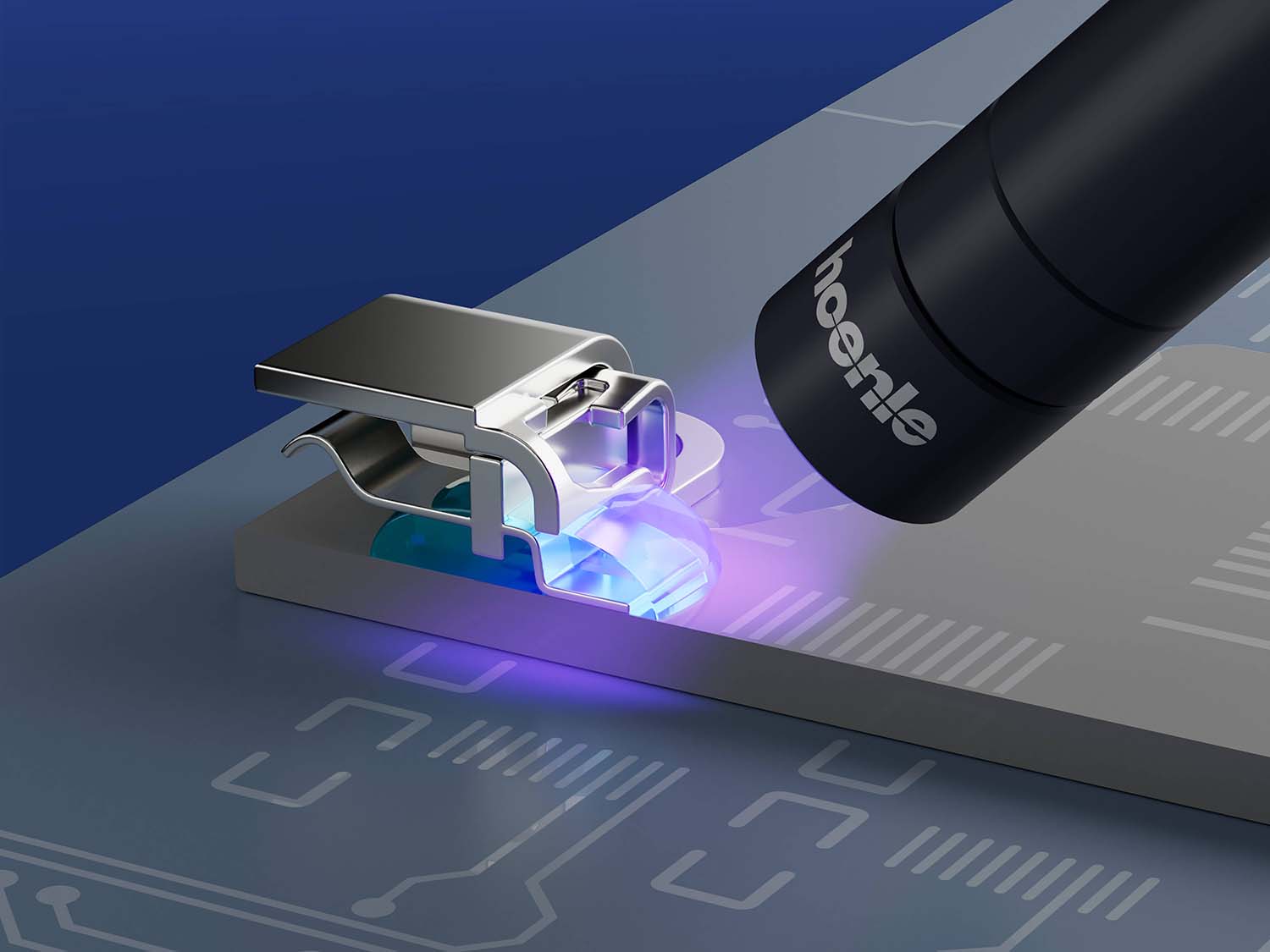
Camera lenses, microscope lenses and lenses and prisms in optical devices such as lasers are often bonded with special adhesives, or cement, and fixed in their housing. In order not to impair the quality of the optical system, these special adhesives must not only have a high optical purity, they must also have low shrinkage in order to avoid stresses in the lens systems. The latter is often achieved by adding special fillers in the nanoscale size range.
Furthermore, prism or lens systems consisting of several lenses or prisms can also be joined together using adhesives or optical cement. These adhesives are used, for example, in cameras and optical sensors or for joining rod lenses in endoscopes. These adhesives must be highly transparent and have a specific refractive index.
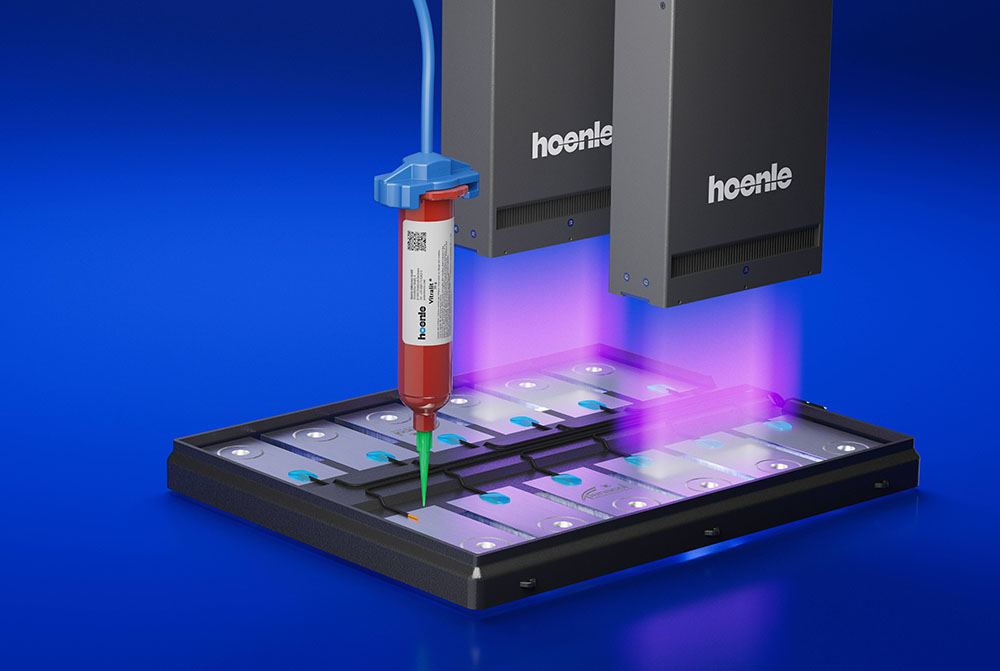
As the optical components have to be fixed quickly after high-precision adjustment, very fast-curing UV adhesives are usually used here. Hoenle offers special adhesives for lens bonding for both glass and plastic lenses.
The table below lists a selection of adhesives that are suitable for lens bonding applications.
To download the technical datasheets (TDS) please click on the adhesive name. Further products and custom solutions are available on request.
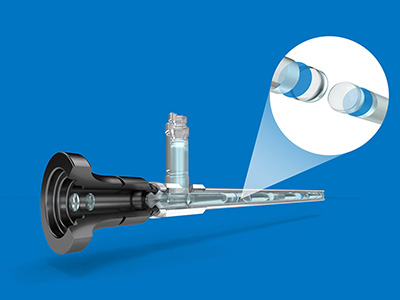
Optically clear resin adhesives are used for bonding the lenses in endoscopes
Downloads
| Adhesive | Application Areas | Viscosity [mPas] | Base | Curing * | Special Properties |
|---|---|---|---|---|---|
| - | 250-400 (LVT, 25 °C, Sp.3/30rpm) | epoxy | UV |
|
|
| - | 10,000-20,000 | epoxy | UV secondary heat cure |
|
|
|
600-1,250 | epoxy | UV |
|
|
|
350-850 (LVT, 25 °C, Sp. 3/60 rpm) | epoxy | UV secondary heat cure |
|
|
|
200-400 (LVT, 25°C, Sp. 2/30 rpm) | epoxy | UV secondary heat cure |
|
|
|
3,500-7,000 (Rheometer, 25 °C, 10s^-1) | epoxy | UV secondary heat cure |
|
|
| - | 4,000-6,000 (LVT 25°C, Sp. 4/30 rpm) | acrylate | UV secondary heat cure |
|
|
| - | 20-100 (LVT 25°C, Sp. 2/60 rpm) | acrylate | UV secondary heat cure |
|
|
| - | 800-1,200 | acrylate | UV secondary heat cure |
|
|
| - | 3,000-6,000 (Rheometer, 25°C, 10s^-1) | acrylate | UV secondary heat cure |
|
|
| - | 600-1,000 (LVT 25°C, Sp. 3/30 rpm) | acrylate | UV VIS |
|
|
| - | 15,000-25,000 | acrylate | UV VIS secondary heat cure |
|
|
|
19,000-32,000 (Rheometer, 25°C, 10s^-1) | acrylate | UV VIS |
|
|
| - | 20,000-30,000 (Rheometer, 25°C, 50s^-1) | acrylate | UV VIS |
|
*UV = 320 – 390 nm VIS = 405 nm
Contact And Support
Do you have any questions or need support for our bonding solutions? We are happy to help you.