Particle Detection in Cleanrooms with Black Light
Particle detection in cleanrooms using black light is a highly effective method for visualizing contaminants that are not visible to the naked eye. UV radiation causes certain particles to fluoresce, making them visible on surfaces such as stainless steel, plastics, and cleanroom clothing. This technology is essential for ensuring the cleanliness of surfaces and materials in controlled environments and offers a quick and efficient way to assess the degree of contamination.
UV radiation with a wavelength of 365 nm excites fluorescent particles and causes them to glow. This fluorescence makes even the smallest contaminants such as dust, fibers, and other particles visible. The use of UV devices for particle detection allows for easy inspection and provides a quick method for assessing whether surfaces meet the required cleanliness standards for different cleanroom classes.
Applications of UV Light for Particle Detection
Surface Inspection: UV radiation is used to inspect surfaces such as stainless steel, plastics, and aluminum for contaminants. In clean rooms, even the smallest particles can affect the production process or product quality. UV devices help to detect these invisible particles and ensure that surfaces are properly cleaned and maintained.
Cleanroom Clothing and Wipers: The cleanliness of cleanroom clothing and wipes is crucial in controlled environments. Black light can be used to check whether these textiles are free of particles, ensuring that personnel do not accidentally introduce contaminants into sensitive areas.
Quick and Efficient Cleanroom Class Control: UV particle detection offers an efficient way to check the cleanliness of cleanroom surfaces, which is often difficult to assess visually. With the help of UV devices, it is possible to quickly determine whether a surface meets the required cleanroom class and take corrective action if necessary.
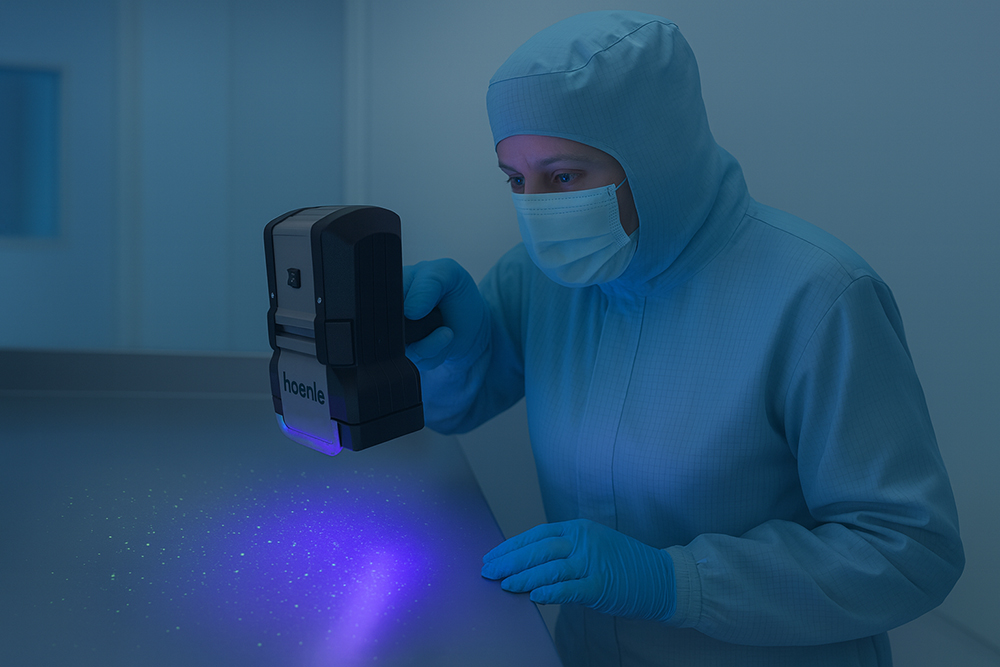
Detecting particles in a cleanroom using black light
Benefits of UV Light for Particle Detection
- Non-Destructive: UV particle detection is a non-intrusive method, allowing surfaces and materials to be inspected without damage.
- Rapid Detection: UV light makes contamination visible, enabling immediate corrective actions and improving cleanroom monitoring efficiency.
- Highly Sensitive: Even the smallest fluorescent particles are visible under UV light, providing a high level of sensitivity in contamination detection.
- Versatility: This method can be applied to a wide range of surfaces, including stainless steel, plastics, aluminum, and textiles, making it suitable for various industries, such as pharmaceuticals, electronics, medical and biotechnology.
Contact And Support
Do you have any questions or need support for particle detection? We are here to help you.