Bonding Plastic Enclosures and Moulded Parts
Plastic components and mouldings of, for example, shrouds, protective panels, art objects, showcases, display stands, shop or exhibition shelving and newspaper stands made from transparent plastics can often be joined only by bonding.
Plastic panels are usually edge- or mitre-joined. Special adhesives also allow stress crack-free bonding of laser-cut edges. For large-surface bonds between plastic panels, on the other hand, very soft, elastic adhesives are required.
Many of these adhesives have a high transparency, so that the joint melds into the assembly after gluing. Edges and mitres appear as if made from a single piece and are no longer recognizable as bonded joints.
Brochure racks made from transparent plastics can be joined with Hoenle adhesive.
The table below lists a selection of adhesives from Hoenle that are recommended for gluing plastic enclosures. Further products and custom solutions are available on request.
To download the technical datasheets (TDS) please click on the adhesive name.
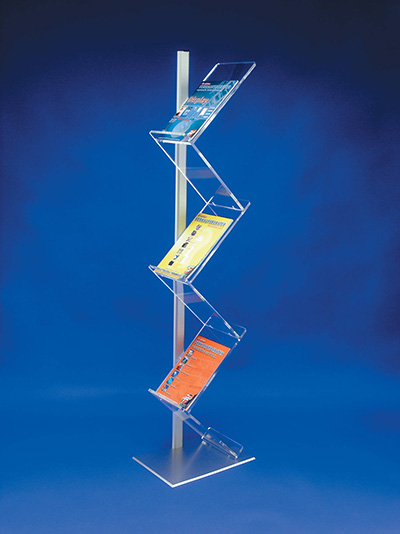
Brochure racks made from transparent plastics can be joined with Hoenle adhesive
| Adhesive | Application Areas | Viscosity [mPas] | Base | Curing * | Substrates | Special Properties |
|---|---|---|---|---|---|---|
| - | 1-3 | cyanoacrylate | moisture, room temperature |
|
|
|
| - | 1-3 | cyanoacrylate | moisture, room temperature |
|
|
|
| - | 70-100 | cyanoacrylate | moisture, room temperature |
|
|
|
|
shear thinning | cyanoacrylate | moisture, room temperature |
|
|
|
|
30-50 | cyanoacrylate | moisture, room temperature |
|
|
|
|
230-350 (LVT, 25 °C, Sp. 2/60 rpm) | cyanoacrylate | moisture, room temperature |
|
|
|
| - | 4-12 (LVT, 25 °C, Sp. 2/60 rpm) | cyanoacrylate | moisture, room temperature |
|
|
|
| - | 100,000-240,000 | cyanoacrylate | moisture, room temperature |
|
|
|
| - | 7,000-15,000 mix (LVT, 25°C, Sp. 4/30 rpm) | 2-part epoxy | thermal, room temperature |
|
|
|
| - | 3,000-4,000 mix (LVT, 25°C, Sp. 4/30 rpm) | 2-part epoxy | thermal room temperature |
|
|
|
| - | 70-150 | acrylate | UV VIS |
|
|
|
|
900-1,500 (LVT, 25°C, Sp. 3/30 rpm) | acrylate | UV VIS |
|
|
|
|
4,000-8,000 | acrylate | UV VIS |
|
|
|
| - | 7,000-9,000 | acrylate | UV VIS |
|
|
|
| - | 700-1,000 | acrylate | UV VIS secondary heat cure |
|
|
|
|
2,100 (Rheometer, 25°C) | acrylate | UV VIS |
|
|
|
|
5,000-10,000 (Rheometer, 25°C, 10s^-1) | acrylate | UV VIS |
|
|
|
|
30-100 | acrylate | UV VIS |
|
|
|
|
40-70 | acrylate | UV VIS |
|
|
|
| - | 100-300 | acrylate | UV VIS |
|
|
|
| - | 10-100 | acrylate | UV VIS |
|
|
|
| - | 1,500-2,500 | acrylate | UV VIS |
|
|
|
|
3,000-5,000 | acrylate | UV |
|
|
|
| - | 1,000-2,000 | acrylate | UV VIS |
|
|
|
| - | 15,000-25,000 | acrylate | UV VIS secondary heat cure |
|
|
|
|
19,000-32,000 (Rheometer, 25°C, 10s^-1) | acrylate | UV VIS |
|
|
|
| - | 20,000-30,000 (Rheometer, 25°C, 50s^-1) | acrylate | UV VIS | - |
|
|
| - | 12,000-30,000 | acrylate | UV VIS |
|
|
|
|
1,000-1,500 | acrylate | UV VIS |
|
|
*UV = 320 – 390 nm VIS = 405 nm
Contact And Support
Do you have any questions or need support for our bonding solutions? We are happy to help you.