Adhesives as UV Masking Material
High value component fabrication often involves processes for surface enhancement. Components made of metal or metal alloys typically undergo operations that can include acid cleaning, grit blasting, peening, plating, and coating with corrosion resistant paints or powder coats. Some surfaces or internal cavities may need to be insulated from these processes for reasons of functionality or processing incompatibility. Masking materials are applied to act as temporary barriers, that are subsequently removed from the completed component after processing.
Due to their relatively low cost, materials such as tapes, solvent-based lacquers, and waxes have traditionally been used as removable masks. The protection provided from these mask materials can be somewhat inconsistent, which has a direct impact on component rework and scrap. Higher indirect costs including elevated insurance premiums, special handling charges, and regulatory reporting can arise from the use of certain solvent-based products in the workplace. But the greatest cost driver of all can be the masking process itself. Masking is typically a very labor-intensive process which can add substantial cost to each component.
Fast UV Masking with Light-Curable Technology
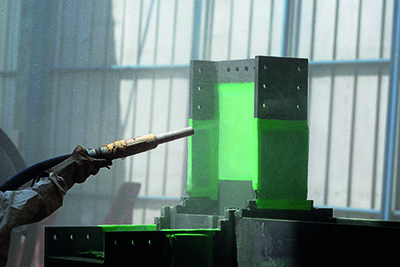
New, removable UV masking material is now available that is derived from light curable adhesive technology. Hoenle’s family of UV light curable mask materials can be easily applied and cured (hardened) in seconds with a UV light source. A single application of the uncured liquid mask by syringe, brush, dip, or spray provides consistent protection from high impact particulates, hot acids, alkali solutions, plating, and paint. The masks are available in many viscosities to accommodate a wide variety of component configurations and applications. Both high and low viscosity spray masks from Hoenle can be easily dispensed and sprayed onto larger surfaces.
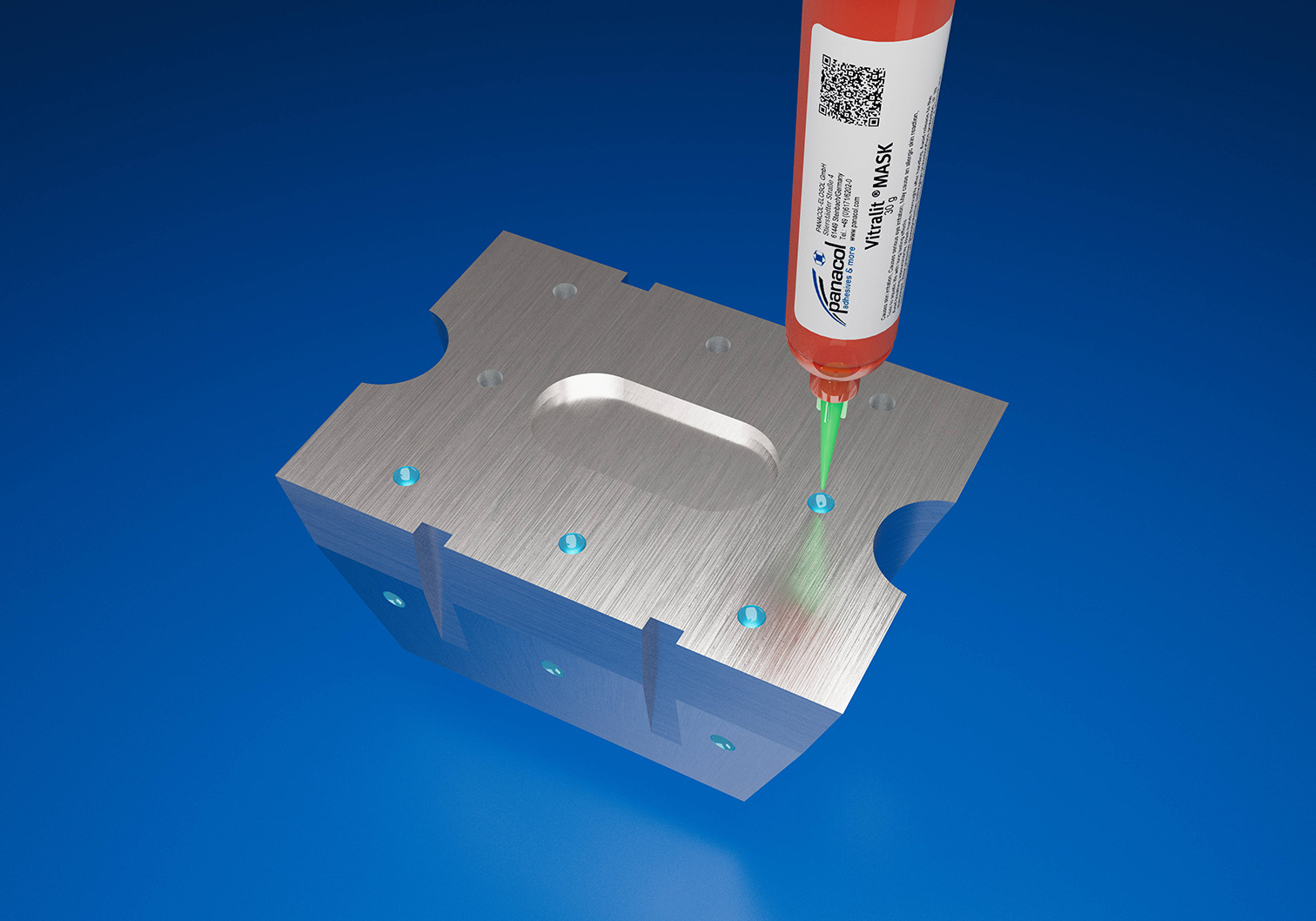
UV mask materials from Hoenle can be easily dispensed or sprayed to create temporary masks on component surfaces.
Flexible Removal Options for Demanding Applications
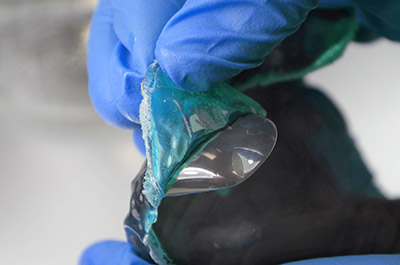
Removal of most Vitralit mask material is accomplished by a simple peel, or a hot water dip and peel. For nickel alloy components that undergo very rigorous processing such as those associated with turbine and hot engine part assembly, Hoenle offers mask materials with significantly higher adhesion and resiliency. Removal of this line of maskants is best accomplished through incineration. Component heat treating processes are typically sufficient to effectively incinerate the mask material, which eliminates the need for a secondary removal operation. Hoenle UV masks will burn cleanly without surface residue. Incineration of the mask material will not affect the metallurgy of the masked component.
Key Features
The advantages of using Hoenle masking products to protect costly, labor intensive components and assemblies are significant:
- Solvent-free, single coat application
- Conforms precisely to component geometry
- No surface residue after removal
- Cures in seconds for continuous in-line processing
- Easy application and removal after processing
- Consistent performance for improved quality
Each of these advantages can be dollarized to reflect the actual process cost savings derived from using Hoenle mask materials.
Typical Applications For UV Maskings
Contact And Support
Do you have any questions or need support for our bonding solutions? We are happy to help you.