UV Masking Materials for Metal Finishing Processes
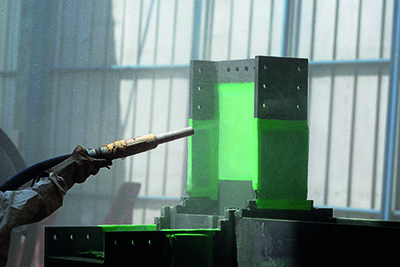
Metal finishing operations often incorporate removable protective barriers or temporary masks to protect component surfaces and cavities during processing. For years, temperature resistant tapes, waxes, and solvent or water-based coatings were the only protective masks available for processes such as grit blasting, shot peening, acid stripping, and plating. Applying these masks is very labor intensive and lengthy process. Performance is not always consistent, which can lead to substantial cost overruns from rework and scrap.
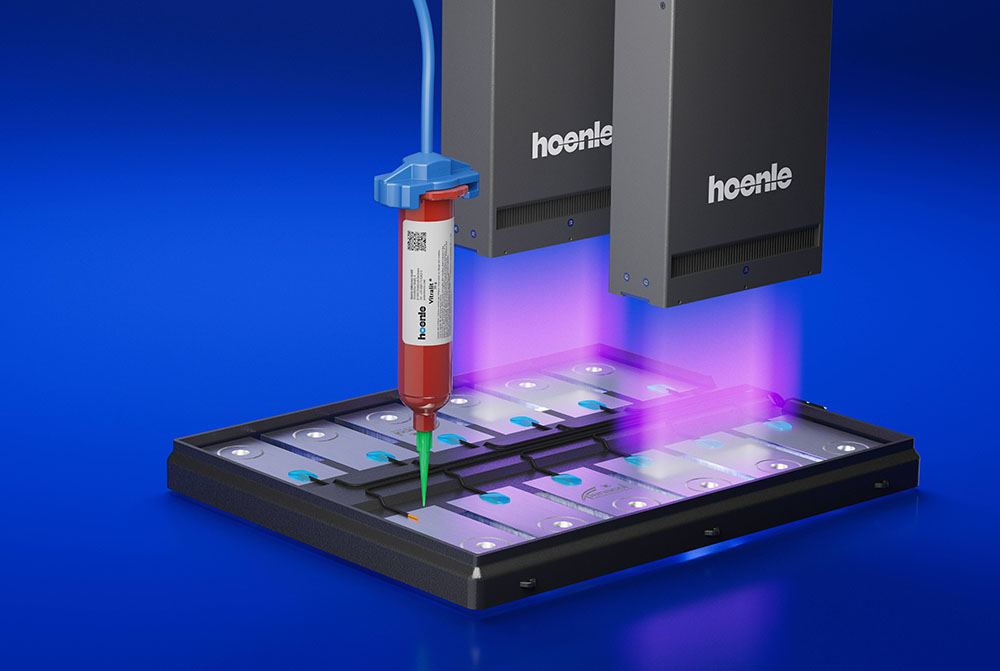
An alternative to traditional masking materials and methods is available from Hoenle-USA. Highly resilient masking materials that cure in seconds with UV/visible light are offered for the specific purpose of temporary surface protection. These UV Masking materials can be easily dispensed on surfaces and into cavities by manual methods or through automated dispensing systems. Once dispensed, the liquid UV Mask is cured (hardened) in seconds using a UV light source. These light sources can be traditional broad spectrum discharge lamps, or new generation high efficiency LED systems. This technology can dramatically reduce labor costs and cycle time.
Each Hoenle UV Mask will have one or more options for removal. All can be removed by incineration (900°F to 1200°F). Quite often, the incineration process can be combined with an existing component heat treating operation for maximum process efficiency. Component surfaces are residue-free after the masks are removed, and ready for the next operation. The highest adhesion UV Masks are ideal for hot engine or turbine components subjected to processes that include grinding, machining, acid strip, plasma spray, and HVOF.
Many Hoenle UV Masks can be removed by peel. Lower adhesion masks formulated for mild grit blast, shot peening, and paint may be peeled at room temperature. For processes that include plating, anodizing, vibratory tumbling, and high-impact blasting, high adhesion UV Masks are required. The peel process requires a short, hot water soak to make the cured UV mask more pliable for peeling. Dry heat may also be used for this purpose.
UV Curing Equipment:
Download Brochure:
A limited number of Hoenle UV Masks can be removed using a water bath with agitation or ultrasonics. These water soluble masks dissolve when immersed in water. Agitation accelerates the removal process. Water soluble masks are best suited for smaller components being subjected to etching, light grinding, polishing, or the application of coatings.
In addition to the surface finishing of components, Hoenle UV Masks can be used as processing aids for the functional testing of components. Air flow testing requires the temporary blocking of certain hole patterns. Hoenle UV masks may be used to quickly seal the necessary holes or channels for testing, and then be removed as required. Internal cavities may also be filled with Hoenle’s thermal curing UV Masks to provide protection from accidental back strikes when laser drilling holes.
Hoenle UV Masking Materials can ensure that high value components are better protected from handling damage during transportation. Highly polished surfaces, tight tolerance bores, or fine threads can be coated and encased with peelable UV Masks.
As an added benefit, Hoenle UV Masking Materials can extend the life of fixtures that are used to secure components during machining, blasting, peening, and plating operations. After showing signs of wear, the UV mask can be removed and replaced, preserving the surfaces of the fixture beneath the UV masking material.
Please download our brochure or open one of the product links below to view our selection of UV Masking Materials. Or, contact Hoenle-USA Applications Engineering to speak with a masking specialist who can guide you to a product best suited for your application.
To download the technical datasheets (TDS) please click on the adhesive name.
| Adhesive | Application Areas | Viscosity [mPas] | Base | Curing * | Special Properties |
|---|---|---|---|---|---|
| - | 200-400 | acrylate | UV VIS |
|
|
| - | 10,000-40,000 | acrylate | UV VIS secondary heat cure |
|
|
| - | 8,000-15,000 (Rheometer, 25 °C, 10s^-1) | acrylate | UV VIS |
|
|
| - | 50,000-70,000 | acrylate | - |
|
|
| - | 14,000-17,000 | acrylate | UV VIS |
|
|
| - | 40,000-60,000 | acrylate | UV VIS |
|
|
| - | 15,000-40,000 | acrylate | UV VIS |
|
|
| - | 50,000-70,000 | acrylate | UV VIS |
|
|
| - | 30,000-50,000 | acrylate | - |
|
|
| - | 90-150 | acrylate | - |
|
|
| - | thixotropic | acrylate | - |
|
|
| - | 50,000-70,000 | acrylate | - |
|
|
| - | 20,000-30,000 | acrylate | - |
|
*UV = 320 – 390 nm VIS = 405 nm
Contact And Support
Do you have any questions or need support? We are happy to help you.