
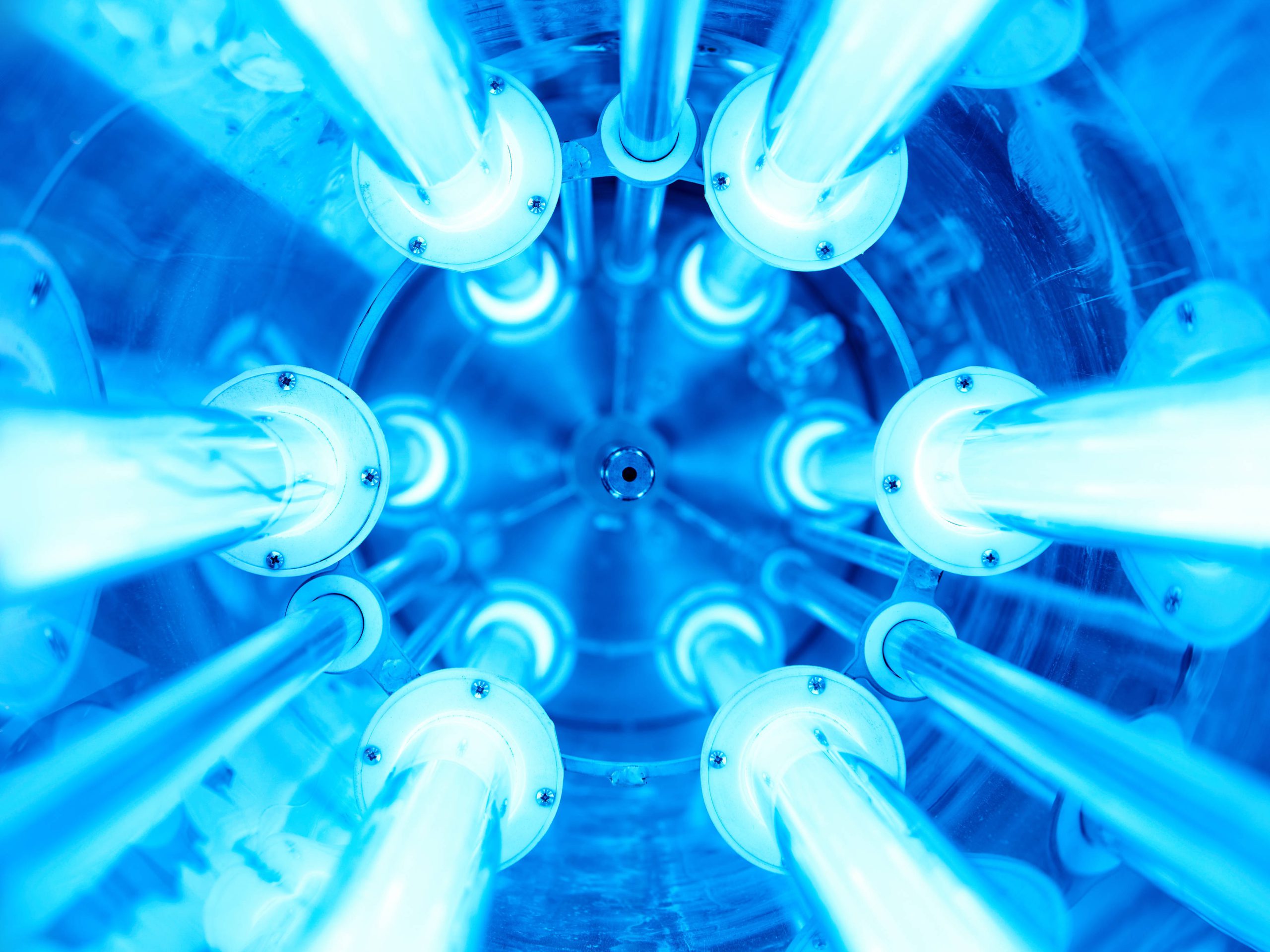
Case Study UV Disinfection System in Semiconductor Water Treatment
Semiconductor manufacturing is among the most water-intensive and contamination-sensitive industries in the world. Ultrapure water is a critical process medium, where even minimal biological or organic contamination can lead to significant efficiency losses, increased maintenance requirements and compromised product quality. As sustainability and operational reliability become increasingly important, manufacturers are re-evaluating traditional water treatment approaches. This case study illustrates how UV-based disinfection technology provides a forward-looking alternative, enabling stable, chemical-free microbial control while supporting both performance and environmental objectives.
Customer from Taiwan relies on UV-Disinfection System in Semiconductor Water Treatment
Chemical-Free UV Disinfection Enhances Water Purity and Process Reliability
In the demanding environment of semiconductor manufacturing, water quality is paramount. Even trace microbial contamination or organic fouling can disrupt ultrapure water systems, accelerate membrane degradation and compromise downstream process stability. To address these challenges with a robust and sustainable solution, a vertical UV disinfection system was integrated into an existing high-purity water treatment line. The goal: deliver reliable microbial control, reduce chemical dependency and improve long-term operational performance.
Reliable Microbial Control Without Chemicals
Traditional disinfection strategies in semiconductor water systems often rely on chemical dosing and enzyme additives to suppress microbial growth. While effective in some respects, these approaches introduce operational complexity, safety concerns around handling chemicals and potential impacts on downstream reverse osmosis (RO) membranes. The customer sought a solution that could:
- Provide consistent microbial inactivation under continuous industrial operation
- Reduce reliance on chemical dosing and enzyme additives
- Enhance water quality stability and extend membrane lifetime
- Maintain seamless integration with existing water treatment infrastructure

UV-Based Disinfection for High-Purity Water
A tailored UV disinfection system was selected and deployed. Key features of the installation included:
- Vertical UV reactor design for stable, continuous flow operation
- High-efficiency industrial UV lamps optimized for prolonged duty cycles
- Integrated control and monitoring panel to support automated operation
The system was designed for chemical-free microbial inactivation, allowing it to operate without altering core process configurations while minimizing operator intervention.
While the system is suitable for high-purity water applications, the following sections focus on validated performance in reclaimed water systems.
Reclaimed Water Treatment for Cooling Tower Systems
In addition to high-purity water applications, UV disinfection has demonstrated strong performance in semiconductor reclaimed water systems, particularly in cooling tower make-up water applications.
Semiconductor manufacturing facilities often reuse treated wastewater to reduce freshwater consumption. However, recycled water typically contains high microbial loading, which can result in:
- Biofilm formation
- RO membrane fouling
- Increased chemical dosing
- Higher operational costs
To address these challenges, the UV disinfection system was implemented in the reclaimed water treatment loop as a low-pressure, chemical-free disinfection solution.
Process Integration in Reclaimed Water Systems
The UV system was installed upstream of chemical dosing within the reclaimed water treatment process.
Typical process flow:
SFAB Collection → Collection Tank → pH Adjustment → UV Disinfection System → Activated Carbon Filter → RO System → Reclaimed Water Supply
Within this configuration, the UV system continuously inactivates microorganisms in circulating water, reducing biological fouling pressure throughout the entire treatment process.
Validated Performance in Reclaimed Water Applications
The following performance data are based on reclaimed water treatment applications under actual operating conditions.
Chemical Reduction
| Parameter | Before UV-System | After UV-System | Reduction Rate |
| Biocide Consumption | 2 000 kg/month | 1 000 kg/month | 50% |
| Enzyme Consumption | 700 kg/month | 500 kg/month | 30% |
UV-based disinfection significantly reduced the need for chemical microbial control.
RO Membrane Performance
| Parameter | Before UV-System | After UV-System | Lifetime Extended Rate |
| RO membrane lifetime | 3 months | 6 months | +50% |
Reduced biofouling helped stabilize RO system performance and significantly reduce maintenance frequency.
Energy and Hydraulic Performance
- RO inlet pressure stabilized at 7 ± 0.5 kg/cm²
- Reduced pump workload associated with fouling-related pressure increases
- Overall system energy consumption reduced by approximately 10–20%
Water Quality Stability
- Enhanced decomposition of residual oxidants such as hydrogen peroxide (H₂O₂)
- Improved feed water consistency, supporting downstream process stability
ESG Contribution
UV disinfection supports sustainable water management by enabling chemical-free microbial control in industrial water reuse systems.
Key ESG contributions include:
- Reduction of hazardous chemical usage
- Lower environmental footprint
- Improved water reuse efficiency
This aligns with corporate ESG goals and sustainable semiconductor manufacturing practices.
Sustainable, High-Performance Water Treatment
The UV disinfection system demonstrated that chemical-free microbial control is not only feasible but also highly effective in semiconductor water treatment environments. By significantly reducing chemical usage, suppressing fouling mechanisms and improving hydraulic and energy performance, the system enhanced operational stability and contributed to a more sustainable water treatment infrastructure.
This case highlights how advanced UV technology can deliver tangible benefits in one of the most demanding industrial water applications, combining process reliability with long-term cost and resource efficiency.
Confidentiality Notice
All performance data are presented as representative ranges observed during actual operation. Specific customer identities, system configurations and proprietary process parameters have been intentionally omitted to protect confidential manufacturing information.
Contact And Support
Do you have any questions or need support? We are happy to help you.